



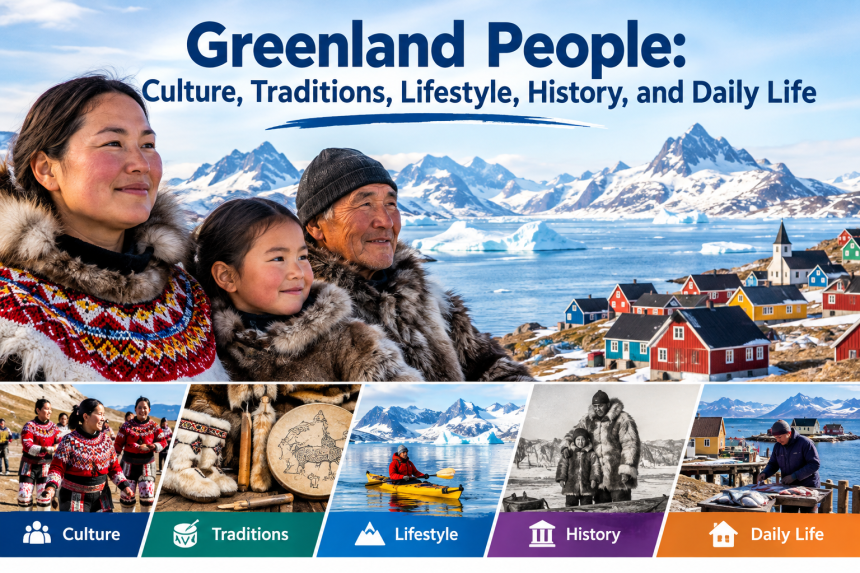
Greenland People: Culture, Traditions, Lifestyle, History, and Daily Life
Greenland is famous for its enormous ice sheets, beautiful Arctic landscapes, and remote communities. However, its people are what make this northern island truly special. Their history, traditions, language, and connection with nature have shaped a unique way of life that continues to evolve today.
The greenland people have strong cultural roots connected to the Inuit communities of the Arctic. Although modern technology, education, and global influences are becoming more common, traditional values remain important in everyday life. From fishing and hunting to music, storytelling, and community celebrations, Greenland offers a fascinating combination of ancient heritage and modern living.
In this guide, you will discover who lives in Greenland, where the island is located, its population, cultural traditions, history, and what everyday life looks like for local residents.
Where Is Greenland and What Makes It Special?
Greenland is the largest island in the world that is not classified as a continent, situated between the Arctic and Atlantic Oceans, northeast of Canada. Although geographically part of North America, Greenland has strong political and cultural connections with Denmark.
Is Greenland a Country?
Greenland is not an independent sovereign country. However, it has extensive self-government and its own parliament and government.
Greenland first achieved home rule in 1979, marking a major step toward greater autonomy, before gaining expanded self-government in 2009. These developments gave local authorities greater control over domestic matters.
This political arrangement is important when understanding Greenland’s identity. Its people have their own language, cultural traditions, and distinct national identity.
Greenland’s Geography and Environment
Greenland covers approximately 2.16 million square kilometers, but much of its land is covered by ice. Most settlements are located along the coastline, where people have access to the sea and natural resources.
There are no roads connecting Greenland’s towns and villages. Residents commonly travel between communities by boat, airplane, helicopter, or snowmobile, depending on the season and location.
Greenland Population: How Many People Live There?
Greenland has a small population compared with its enormous geographical size. According to recent population estimates, approximately 56,000 to 57,000 people live across the island.
The greenland population is spread across coastal towns and smaller settlements. Nuuk, the capital, is the largest city and an important center for education, government, business, and healthcare.
Greenland Population and Community Life
Most residents are of Inuit ancestry, particularly Kalaallit Inuit.
Some important population facts include:
- Population: Approximately 56,000–57,000 people.
- Capital: Nuuk.
- Official language: Greenlandic.
- Main Indigenous population: Kalaallit Inuit.
- Currency: Danish krone.
- Political Status: An autonomous territory that governs its own affairs while remaining part of the Kingdom of Denmark.
Because communities are relatively small, social relationships often play an important role in everyday life. Family connections, local traditions, and community support help maintain strong relationships between residents.
What Is the Pop of Greenland Compared with Its Size?
The pop of Greenland is surprisingly small considering its massive land area. Its population density is among the lowest in the world because most of the island is covered by ice and unsuitable for permanent settlement.
This low population density creates a lifestyle where communities are separated by large distances, and local relationships become especially important.
Greenland People and Their Inuit Heritage
The cultural identity of Greenland is closely connected to Inuit history. The ancestors of modern Greenlandic Inuit arrived through Arctic migration routes thousands of years ago.
Over generations, they developed knowledge and skills that helped them survive in one of the world’s harshest environments.
Who Are the Kalaallit People?
The Kalaallit are the Indigenous Inuit people of western Greenland, forming the island’s largest cultural community and playing a vital role in shaping its language, traditions, heritage, and national identity.
Their ancestors developed practical ways to live with Arctic conditions, including hunting, fishing, clothing production, and building shelters.
Traditional knowledge was passed from parents and grandparents to younger generations through stories, practical experience, and community activities.
Today, Kalaallit culture remains an important part of Greenlandic society, even as lifestyles continue to change.
Languages Spoken in Greenland
It is an Inuit language with several regional variations.
Danish is also widely understood, especially in education, administration, and professional settings. English is increasingly used in tourism and international communication.
Language plays an important role in preserving cultural identity. Many Greenlanders take pride in speaking Greenlandic and keeping their traditional expressions alive.
Greenland Culture, Traditions, and Celebrations
Greenlandic culture reflects a deep relationship between people, nature, family, and community. Traditional practices remain visible in food, clothing, music, art, and celebrations.
Traditional Clothing and Craftsmanship
Traditional Greenlandic clothing was designed to protect people from extremely cold Arctic weather.
Historically, clothing was made from animal skins, fur, and other natural materials. Today, traditional garments are still worn during important celebrations and cultural events.
The national costume of Greenland is particularly recognizable for its colorful embroidery, detailed beadwork, and decorative materials.
<PRIVATE_PERSON> Greenlandic women traditionally wear beautiful costumes featuring decorative collars, boots, and distinctive designs, while men’s traditional clothing often includes practical Arctic-inspired elements.
Music, Dance, and Storytelling
Music and storytelling have long been part of Greenlandic cultural life. Traditional drum dancing, known as qilaatersorneq, is one of the island’s recognized cultural practices.
Drumming historically served different purposes, including entertainment, storytelling, and community gatherings.
Modern Greenlandic music combines traditional influences with contemporary styles such as rock, pop, and hip-hop.
Important Greenlandic Celebrations
Greenland celebrates several important cultural and national occasions.
One of the most significant is Greenland National Day, celebrated on June 21, which also marks the summer solstice.
During this celebration, communities organize music, traditional clothing displays, speeches, food, and social gatherings.
Other celebrations include Christmas, New Year, and local community festivals.
Daily Life in Greenland: Food, Work, and Family
Life in Greenland is shaped by the Arctic climate, geographical isolation, and strong community relationships. While traditional activities remain important, modern residents also enjoy contemporary lifestyles.
Traditional Greenlandic Food
Food is closely connected to the surrounding environment. Fishing and hunting have historically provided essential sources of nutrition.
Traditional dishes may include:
- Fish and seafood.
- Seal meat.
- Whale meat.
- Reindeer.
- Musk ox.
- Arctic berries.
One well-known traditional Greenlandic dish is suaasat, a hearty soup commonly prepared with meat, onions, rice, and potatoes.
Modern Greenlandic meals also include imported foods, vegetables, dairy products, and international dishes. However, locally sourced seafood remains an important part of many diets.
Jobs and Economic Activities
Employment opportunities vary between Greenland’s larger towns and smaller settlements.
Fishing is one of the most important industries, particularly shrimp and halibut fishing. Tourism, public services, education, construction, and transportation also contribute to the economy.
In smaller communities, hunting and fishing may remain important for household food supplies and cultural traditions.
Family and Community Relationships
Family plays a central role in Greenlandic society. Many people maintain close relationships with relatives, and community activities provide opportunities for social connection.
Traditional knowledge is often shared between generations. Older family members may teach younger people about fishing, hunting, local history, and cultural customs.
Modern Greenlandic families also experience the same changes found in many other societies, including urbanization, digital communication, and changing employment opportunities.
History of Greenland People and Their Changing Society
Greenland’s history includes several waves of migration, cultural development, and international contact.
Different Arctic cultures arrived and disappeared over time, contributing to the island’s complex history.
The ancestors of today’s Inuit population arrived through later migrations, particularly associated with the Thule culture.
Norse Settlement and European Contact
Norse settlers arrived in Greenland around the late 10th century, associated with Erik the Red. They established settlements in southern Greenland but eventually disappeared.
Later, European contact increased, particularly through Danish-Norwegian colonial activity beginning in the 18th century.
Greenland remained under Danish colonial administration until its political arrangements changed during the 20th century.
Modern Greenland and Self-Government
In 1979, home rule was introduced, allowing greater local political control.
In 2009, the Self-Government Act expanded Greenland’s autonomy and formally recognized Greenlanders as a people under international law.
Today, Greenland continues to balance its Indigenous identity, modern development, and relationship with Denmark.
Modern Greenland: Education, Technology, and Tourism
Although Greenland is often associated with traditional Arctic life, its modern society is developing in many ways.
Young Greenlanders attend schools, use smartphones, participate in international culture, and pursue careers in different fields.
Nuuk offers modern services, educational institutions, healthcare facilities, restaurants, and businesses.
Education and Opportunities
Education is an important part of Greenland’s development. Greenlandic is used in schools, while Danish and English also play roles in education and professional opportunities.
Some students continue their higher education in Greenland, while others study abroad, particularly in Denmark.
Tourism and Cultural Experiences
Tourism allows visitors to learn about Greenlandic traditions and experience its remarkable natural environment.
Visitors can explore local museums, traditional food, cultural performances, and coastal settlements.
However, responsible tourism is important. Travelers should respect local customs, Indigenous knowledge, wildlife, and the environment.
The best way to understand Greenland is not simply to admire its glaciers and icebergs but also to appreciate the people who call this remarkable island home.
Frequently Asked Questions About Greenland People
1. What Are the People of Greenland Called?
The Indigenous people of Greenland are primarily Kalaallit Inuit. Greenlanders may also be referred to as Greenlandic people, reflecting their shared cultural and national identity.
2. What Is the Population of Greenland in 2026?
Greenland has approximately 56,000 to 57,000 residents. The exact figure changes over time due to births, deaths, and migration.
3. Is Greenland a Country or Part of Denmark?
It manages many domestic matters but is not an independent sovereign state.
4. What Language Do Greenland People Speak?
Greenlandic, particularly Kalaallisut, is the official language. Danish is also widely spoken, and English is used in tourism and international communication.
5. What Do People in Greenland Do for a Living?
Many Greenlanders work in fishing, tourism, government, education, healthcare, construction, and other services. Hunting and fishing also remain important traditional activities in some communities.
Conclusion: Discover the Unique Identity of Greenland People
The greenland people represent a fascinating combination of Indigenous heritage, traditional knowledge, and modern Arctic living. Their culture has developed through centuries of adaptation, community cooperation, and a strong connection with the natural environment.
From Inuit traditions and Greenlandic language to modern education and economic development, Greenland offers much more than spectacular icy landscapes.
Understanding its people helps visitors and readers appreciate the island’s history, identity, and future. Explore more about Greenland’s culture, geography, and traditions to discover what makes this Arctic society truly remarkable.