



Introduction
Gold has fascinated people for thousands of years because of its beauty, rarity, and value. Whether you’re buying jewelry, investing in precious metals, or simply curious about gold purity, you’ve probably wondered, what karat is pure gold?
Understanding gold karats can help you make smarter purchasing decisions and choose jewelry that matches your style, budget, and lifestyle. In this guide, you’ll learn how gold purity is measured, the differences between various karat levels, and which type of gold may be best for your needs.
What Karat Is Pure Gold?
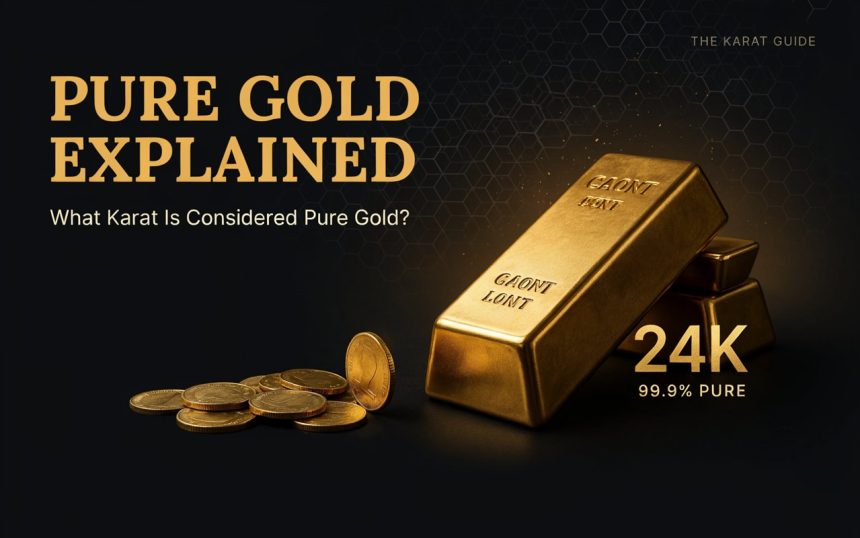
The answer is simple: 24-karat (24K) gold is considered pure gold. It contains approximately 99.9% gold with only trace amounts of other elements.
How Many Carats Is Pure Gold?
Pure gold is 24 karats (24K), meaning it contains nearly 100% gold. Because it is soft and easily scratched, pure gold is often used for investment purposes and special jewelry rather than everyday wear.
What Does Karat Mean in Gold?
The carat of gold, more commonly spelled “karat” in the United States, measures the amount of pure gold in an item.
The purity of gold is measured on a 24-karat system, with 24 parts representing the highest level of gold content.
- 24K Gold: 24 out of 24 parts are gold (99.9% pure)
- 22K Gold: 22 out of 24 parts are gold (91.7% pure)
- 18K Gold: 18 out of 24 parts are gold (75% pure)
- 14K Gold: 14 out of 24 parts are gold (58.3% pure)
- 10K Gold: 10 out of 24 parts are gold (41.7% pure)
As the karat number decreases, the amount of pure gold decreases while the percentage of other metals increases.
Why Isn’t Pure Gold Used for All Jewelry?
Although pure gold is valuable, it is also naturally soft.
Soft and Easy to Scratch
24K gold can bend, scratch, and lose its shape more easily than lower-karat gold.
Less Suitable for Everyday Wear
Rings, bracelets, and other frequently worn jewelry often need greater durability.
Alloys Increase Strength
Jewelry makers combine gold with metals like silver, copper, and zinc to improve strength and durability.
This is why lower-karat gold remains popular for everyday jewelry.
10K vs 14K Gold: What’s the Difference?
The debate between 10K vs 14K gold often comes down to durability, appearance, and price.
| Feature | 10K Gold | 14K Gold |
|---|---|---|
| Gold Purity | 41.7% | 58.3% |
| Durability | Higher | Moderate |
| Color | Lighter yellow | Richer gold tone |
| Price | More affordable | More expensive |
| Everyday Wear | Excellent | Very good |
Which One Should You Choose?
Choose 10K gold if you prioritize durability and affordability. Choose 14K gold if you prefer a richer gold appearance while still maintaining good durability.
14K Gold vs 18K Gold: Which Is Better?
Many jewelry buyers compare 14K gold vs 18K gold when selecting engagement rings and fine jewelry.
| Feature | 14K Gold | 18K Gold |
|---|---|---|
| Gold Content | 58.3% | 75% |
| Color | Bright yellow | Deep, luxurious yellow |
| Durability | More durable | Softer |
| Price | More affordable | More expensive |
Which Karat Is Better?
The answer depends on your needs:
- Choose 14K gold for daily wear and durability.
- Choose 18K gold for premium appearance and higher gold content.
What Karat Gold Is Best?
There is no single answer to what karat gold is best because the right choice depends on personal preferences.
Best for Everyday Jewelry
14K gold offers an excellent balance of beauty, strength, and value.
Best for Luxury Jewelry
18K gold provides a richer color and higher gold content.
Best for Investment
24K gold is generally preferred for investment because of its exceptional purity.
Best for Budget-Conscious Buyers
10K gold provides durability and affordability while still containing real gold.
How to Choose the Right Gold Karat
Before purchasing gold jewelry, consider these factors:
Your Lifestyle
Active lifestyles often benefit from more durable options like 10K or 14K gold.
Your Budget
Higher-karat gold typically costs more because it contains a greater percentage of pure gold.
Your Style Preferences
Some people prefer the deeper yellow appearance of higher-karat gold, while others appreciate the subtle tone of lower-karat pieces.
Intended Use
Jewelry worn daily may benefit from stronger alloys, while special pieces can prioritize higher purity.
Common Misconceptions About Gold Karats
Higher Karat Does Not Always Mean Better
A higher karat means greater purity, but it does not automatically make the jewelry more practical.
All Gold Jewelry Is Real Gold
Even 10K gold contains genuine gold and is recognized as real gold jewelry.
Pure Gold Is Not Indestructible
Despite its value, 24K gold is relatively soft and requires careful handling.
Frequently Asked Questions
What karat is pure gold?
Pure gold is 24-karat gold, containing approximately 99.9% pure gold.
How many carats is pure gold?
Pure gold is 24 carats, meaning all 24 parts are gold.
Which Gold Karat Offers the Ideal Balance for Everyday Jewelry?
Many experts recommend 14K gold because it balances durability, beauty, and value.
Is 24K gold suitable for rings?
It can be used for rings, but its softness makes it less practical for everyday use.
Is 10K gold real gold?
Yes. Although it contains less pure gold than higher-karat options, 10K gold is genuine gold jewelry.
Conclusion
Understanding what karat is pure gold helps you make informed decisions when buying jewelry or investing in precious metals. Pure gold is 24K, but lower-karat options like 14K and 18K often offer greater durability and practicality for everyday wear.
Whether you’re comparing 10K vs 14K gold, exploring 14K gold vs 18K gold, or wondering what karat gold is best, the ideal choice depends on your budget, lifestyle, and personal preferences. Take time to understand gold purity, and you’ll be better prepared to choose pieces that provide lasting beauty and value.