



Introduction
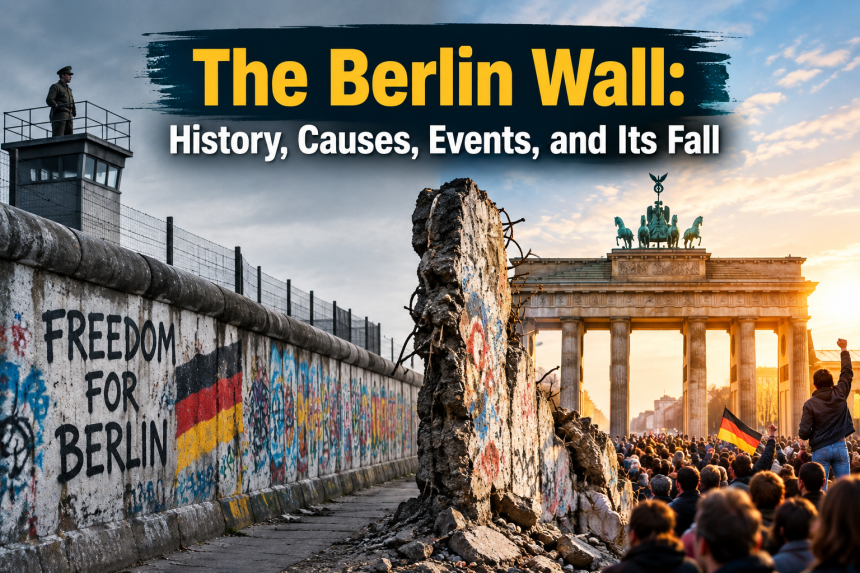
The history of the Berlin Wall is one of the most important chapters of the Cold War. For nearly three decades, a heavily guarded barrier divided Berlin into East and West, separating families, friends, and communities. The wall became a powerful symbol of the political and ideological conflict between the Soviet Union and the Western powers.
But why was the wall built? When was the Berlin Wall built, and what happened to it? Most importantly, when did the Berlin Wall fall?
In this guide, we will explore the reasons behind its construction, major events during its existence, the lives of people affected by the division, and the events that finally brought the wall down.
When Was the Berlin Wall Built?
The Berlin Wall was built on August 13, 1961, by East Germany, officially known as the German Democratic Republic (GDR). Construction began during the early hours of the morning, when East German authorities closed crossing points between East and West Berlin.
At first, workers installed barbed wire and temporary barriers. These were later replaced with concrete walls and a sophisticated security system.
Why Did East Germany Build the Wall?
One major reason was the growing number of people leaving East Germany for the West. Between 1949 and 1961, millions of East Germans moved to West Germany. Many passed through Berlin because movement between the city’s eastern and western sectors was easier than crossing the wider border.
The East German government wanted to stop this population loss. The wall also helped maintain political control and prevent people from freely leaving the country.
What Was the Purpose of the Berlin Wall?
The main purpose of the Berlin Wall was to prevent East German citizens from leaving East Germany through West Berlin.
East German authorities described the barrier as a defense against Western threats, but its practical effect was to restrict movement from East to West. The wall became one of the clearest physical representations of the division between communist Eastern Europe and the capitalist West.
The barrier also reflected the larger Cold War confrontation between the United States and its allies and the Soviet Union and its allies.
All of the Berlin Wall: Structure and Security
The Berlin Wall was far more than a single concrete barrier; it was a complex border system with multiple layers of security.All of the Berlin Wall included a complex system of barriers, fences, watchtowers, patrol roads, lighting, and controlled crossing areas.
Over time, the border system became increasingly difficult to cross.
How Long Was the Berlin Wall?
The Berlin Wall system stretched for roughly 155 kilometers (96 miles) around West Berlin. About 43 kilometers of the barrier divided East and West Berlin directly, while the rest surrounded West Berlin and separated it from the surrounding East German territory.
The wall changed significantly over the years. Concrete sections were strengthened, and additional security measures were introduced to make unauthorized crossings more difficult.
What Was Life Like Near the Wall?
For ordinary Berliners, the wall had immediate and dramatic consequences. People who had previously lived, worked, or studied on opposite sides could suddenly be separated.
Some families could no longer visit each other freely. Workers lost access to jobs, and transportation routes were disrupted. The wall also divided streets and neighborhoods that had previously been connected.
Major Events in the History of the Berlin Wall
The wall quickly became an international symbol of the Cold War. Several important events demonstrated its political importance.
The Berlin Crisis
The construction of the wall followed years of tension over Berlin. The city had been divided into American, British, French, and Soviet sectors after World War II.
West Berlin became closely connected with West Germany, while East Berlin served as the capital of East Germany. This unusual arrangement made Berlin one of the most sensitive locations in the Cold War.
Attempts to Escape
Thousands of people attempted to cross from East Berlin to West Berlin. Some used tunnels, hidden compartments, forged documents, or other methods.
Many successfully escaped, but others were arrested or killed while attempting to cross the fortified border. These incidents demonstrated how dangerous the divided city had become.
Ronald Reagan’s 1987 Speech
In 1987, U.S. President Ronald Reagan delivered a famous speech near the Brandenburg Gate. He urged Soviet leader Mikhail Gorbachev to take steps toward opening the Berlin Wall and ending the division of the city.
The speech became closely associated with the broader political changes taking place in Eastern Europe, although the wall’s eventual fall resulted from a much wider series of developments.
When Did the Berlin Wall Fall?
The Berlin Wall came down on November 9, 1989, marking a historic turning point in Germany and Europe.
The immediate trigger came when East German authorities announced new rules concerning travel. During a press conference, East German official Günter Schabowski appeared to indicate that the new travel regulations would take effect immediately.
Large crowds soon gathered at border crossings. Border guards, facing growing pressure and uncertainty, eventually opened the checkpoints.
Residents of East and West Berlin were finally able to cross the border without restriction. Crowds also climbed onto the wall, celebrated together, and began breaking pieces from the concrete structure.
Why Did the Berlin Wall Fall?
The fall of the wall was the result of several factors. Political reforms in the Soviet Union, growing public demonstrations in East Germany, increased pressure for freedom of movement, and changes across Eastern Europe all contributed.
The wall’s opening became a turning point in European history. Less than a year later, Germany was reunified on October 3, 1990.
The Legacy of the Berlin Wall
The history of the Berlin Wall continues to attract historians, students, and travelers because it provides a powerful example of how political divisions can affect ordinary people.
Today, only sections of the original wall remain. Several former border areas have become memorials, museums, and historical sites. The East Side Gallery, for example, features murals painted on a surviving section of the former wall.
The wall’s legacy is not only about the Cold War. It also represents the human desire for freedom, movement, family connections, and political change.
Frequently Asked Questions
When was the Berlin Wall built?
The Berlin Wall was built beginning on August 13, 1961, when East German authorities closed the border between East and West Berlin.
When did the Berlin Wall fall?
The Berlin Wall fell on November 9, 1989, after East German border crossings were opened amid growing public pressure and political change.
How long was the Berlin Wall?
The overall Berlin Wall border system was approximately 155 kilometers (96 miles) long around West Berlin.
What was the purpose of the Berlin Wall?
Its primary practical purpose was to stop East German citizens from leaving East Germany through West Berlin.
How long did the Berlin Wall exist?
The Berlin Wall stood from 1961 until 1989, meaning it existed for approximately 28 years.
Conclusion
The history of the Berlin Wall shows how Cold War politics shaped everyday life in Berlin and beyond. Built in 1961 to restrict movement from East Germany to the West, the wall divided a city and became a global symbol of political separation.
Its fall on November 9, 1989, marked a historic moment and helped pave the way for German reunification the following year.
If you want to understand the Cold War and modern European history better, explore more historical events, timelines, and detailed guides to discover how the past continues to shape the world today.