



Introduction
Copper is one of the most widely used industrial metals, appearing in electrical wiring, construction materials, plumbing, electronics, vehicles, and renewable-energy equipment. Because of its broad demand, many investors, recyclers, businesses, and everyday sellers keep an eye on the copper price per oz when estimating the value of copper.
Copper is normally quoted in financial markets by the pound rather than the ounce. That can make price comparisons confusing, especially when you are also checking precious metal prices today, such as gold and silver. This guide explains how copper prices work, how to convert a pound price into an ounce value, and which factors can cause the market to rise or fall.
What Is the Copper Price Per Oz?
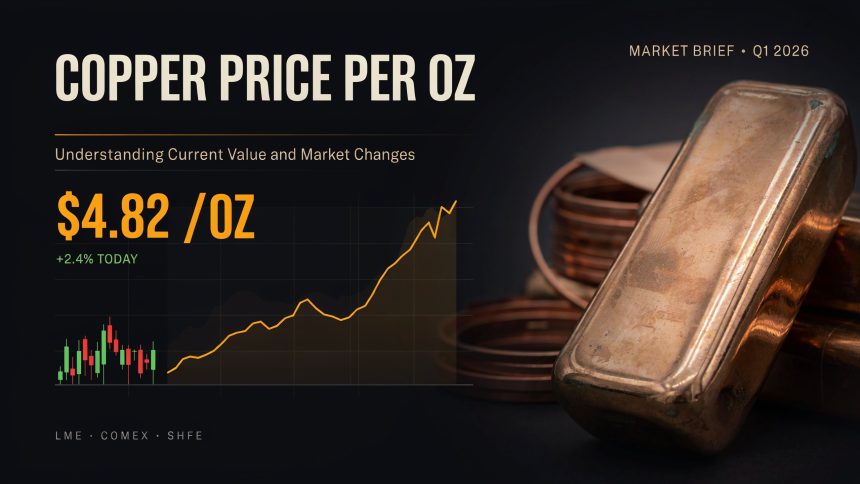
The copper price per oz represents the value of one avoirdupois ounce of copper based on a quoted market price. Since copper is commonly priced by the pound, you can convert the price by dividing the pound value by 16.
For example:
For example, suppose the current copper market rate stands at $5.00 for each pound.
$5.00 ÷ 16 = $0.3125 per oz
This calculation gives an approximate market value for one ounce of copper. The actual amount received for physical copper may be different because scrap dealers, suppliers, and retailers can use their own pricing, grades, fees, and margins.
Copper Price Today: What Determines the Market?
The copper price today can change throughout the trading day as buyers and sellers respond to new information. Unlike a fixed retail price, the market value of copper is influenced by several interconnected factors.
Global Industrial Demand
Copper demand is closely connected to manufacturing and construction. Strong economic activity can increase the need for wiring, machinery, buildings, transportation equipment, and electrical products.
Growing investment in electric vehicles, power infrastructure, solar systems, and other technologies can also support copper demand because these applications use significant amounts of the metal.
Mining and Supply
Copper prices are also affected by how much material reaches the market. Mine production can be influenced by operational problems, labor disputes, weather conditions, regulations, and changes in investment.
When supply becomes tighter while demand remains strong, prices can experience upward pressure.
Economic Conditions
Interest rates, inflation expectations, currency movements, and broader economic growth can influence commodity markets. Traders often watch these factors when assessing future industrial demand.
Because copper is heavily connected to manufacturing, its price is sometimes viewed as an indicator of economic activity.
How Much Is Copper a Pound?
People asking how much is copper a pound should first determine what type of price they need.
There is a difference between a market quotation and the amount a person receives when selling physical copper. Clean copper wire, copper tubing, mixed scrap, insulated wire, and other materials can have different values.
For example, a market quotation might indicate a broad benchmark value, while a scrap yard may offer a lower amount after considering material quality, processing costs, local demand, and business expenses.
Converting Copper From Pounds to Ounces
The basic conversion is simple:
To find the per-ounce copper value, divide the price per pound by 16.
For example, if the quoted price is $4.80 per pound:
$4.80 ÷ 16 = $0.30 per ounce
This method is useful when comparing copper prices with other measurements or estimating the value of a specific quantity.
Copper Compared With Gold and Silver Prices
Copper is often discussed alongside spot silver and gold, but the metals have very different markets and uses.
Gold and silver are widely recognized as precious metals and are commonly tracked for investment, jewelry, industrial applications, and monetary purposes. Copper is generally considered an industrial metal because its largest demand comes from manufacturing, construction, electrical systems, and infrastructure.
When researching precious metal prices today, remember that gold and silver are typically quoted per troy ounce. Copper is commonly quoted per pound.
A troy ounce is approximately 31.1 grams, while a standard avoirdupois ounce is approximately 28.35 grams. Therefore, simply comparing an ounce price for copper with an ounce price for gold or silver can be misleading unless you know which ounce measurement is being used.
Copper Versus the Price of Steel Per Pound
People researching the price of steel per pound may also compare it with copper when evaluating construction or manufacturing materials.
However, price comparisons alone do not tell the complete story. Copper and steel have different physical properties, applications, supply chains, and levels of demand.
Copper is especially valuable for electrical conductivity, while steel is widely used for structural components, machinery, vehicles, appliances, and construction.
For businesses, the right material depends on factors such as strength, conductivity, corrosion resistance, weight, durability, and total project cost rather than simply the current price per pound.
Why Copper Prices Can Change Quickly
Several events can move copper prices in either direction. Important factors include:
- Changes in global manufacturing activity
- New infrastructure spending
- Mine production disruptions
- Changes in inventories
- Currency movements
- Energy and transportation costs
- Demand from electric vehicles and renewable energy
- Expectations about future economic growth
Because these variables can change, a copper quotation from one day should not automatically be treated as the current value on another day.
Market Price vs. Physical Copper Value
Another important distinction is between a benchmark market price and the price of physical copper.
A market quotation generally reflects standardized trading conditions. Physical copper may be priced according to purity, form, quantity, location, transportation, and processing requirements.
If you are selling scrap copper, ask the buyer about the exact grade being priced and whether the quoted amount is based on gross or net weight.
How to Check Copper Value Before Buying or Selling
Before making a transaction, use a few simple steps:
- Check the latest market quotation. Avoid relying on an old price copied from an article.
- Identify the unit. Confirm whether the price is quoted per pound, kilogram, or another measurement.
- Convert the price if necessary. Divide a pound price by 16 to estimate the value per standard ounce.
- Identify the copper grade. Physical copper products can have significantly different values.
- Compare multiple buyers or sellers. Local prices can vary.
- Consider fees and transportation. These additional expenses may lower the net amount you ultimately receive.
This approach gives you a more realistic estimate than looking at a single headline price.
Frequently Asked Questions
What is the copper price per oz?
The copper price per oz is the estimated value of one standard ounce of copper based on a market quotation. Since copper is commonly quoted per pound, divide the pound price by 16 to calculate the approximate ounce value.
How much is copper a pound?
The value of copper per pound changes with market conditions. The price also varies depending on whether you are referring to a market benchmark, refined copper, manufactured material, or scrap copper.
Is copper priced like gold and silver?
Not exactly. Gold and silver are commonly quoted per troy ounce, while copper is generally quoted per pound. Their markets also respond to different supply, demand, and investment factors.
Why does the copper price change?
Copper prices can move because of changes in industrial demand, mining supply, inventories, economic conditions, currency values, infrastructure investment, and expectations about future consumption.
How do I calculate copper price per ounce from a pound price?
Divide the copper price per pound by 16. For example, a $4.00-per-pound price would equal approximately $0.25 per standard ounce.
Conclusion
Once you understand how copper is priced, converting its value between pounds and ounces becomes simple and straightforward. Market prices can change because of industrial demand, mining supply, economic conditions, infrastructure investment, and other global factors.
If you are comparing copper with silver, gold, or steel, always check the measurement unit and the type of material being priced. For physical copper, also consider grade, quality, location, and buyer margins before estimating its final value.